GTFS-ride: ridership data tools and publishing
A ridership-data website, conversion tools, and visualization app developed with Oregon State University.

Transit agency staff, transportation researchers, and software developers
Data standards implementation · Open-source development · Data visualization · Website development
Transit agency staff, transportation researchers, and software developers
Data standards implementation · Open-source development · Data visualization · Website development
Project overview
The challenge
Transit agencies collect passenger counts in different formats. Turning those records into consistent, shareable ridership data requires tools that connect automated passenger counts with the routes, stops, and trips in GTFS.
Our work
Working with Oregon State University, BlinkTag supported GTFS-ride development and adoption by creating its public website, an open-source data conversion tool, and a ridership visualization app.
A public home for the standard
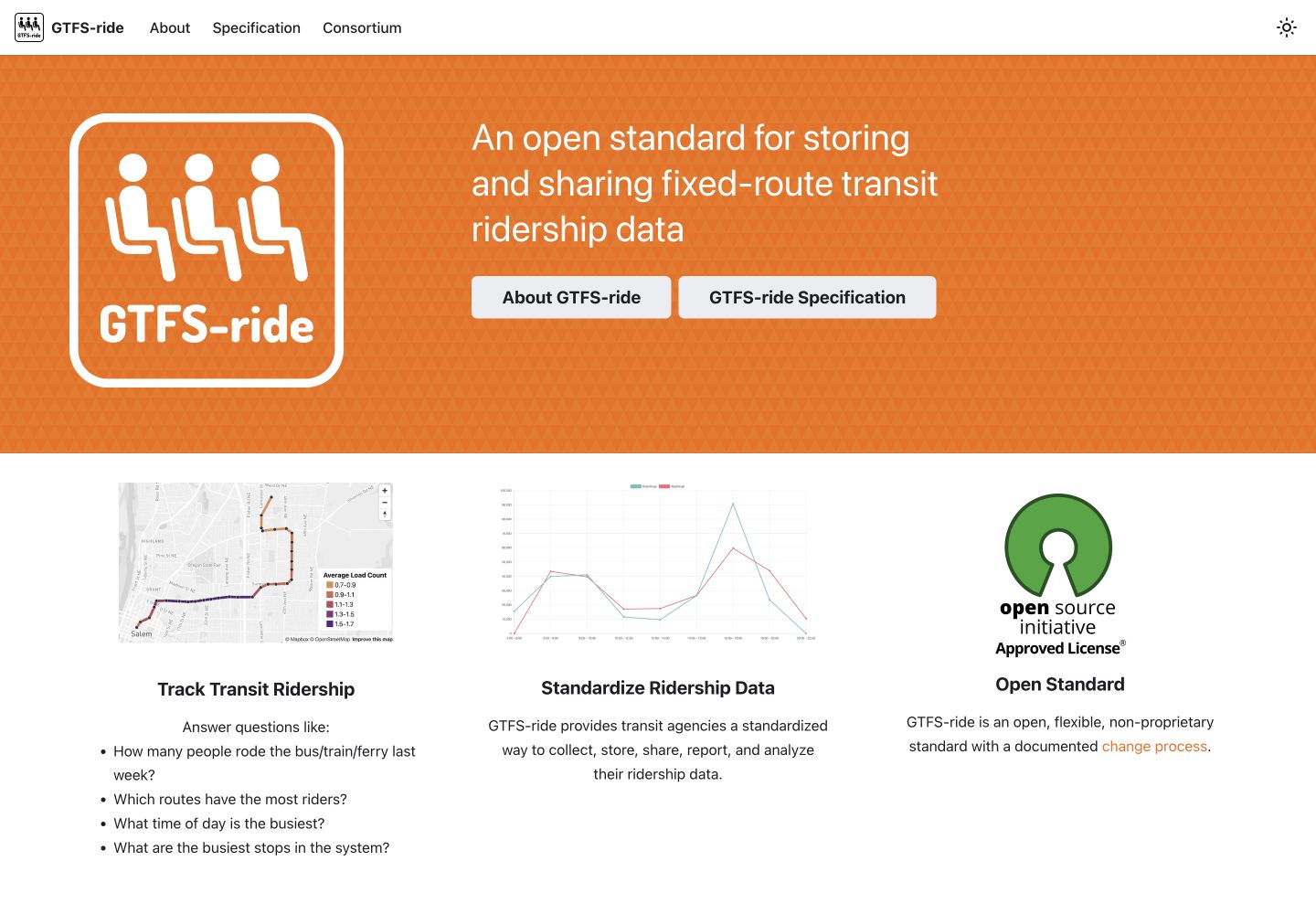
We built gtfsride.org with an introduction, quick-start guidance, the specification, and community resources for agencies and developers.
From passenger counts to standardized data
We built node-gtfs-ride to generate GTFS-ride files from GTFS schedules and automated passenger counter (APC) records. The command-line tool supports GMV, Swiftly, and Passio formats, with inputs from local files, hosted CSV files, or the Swiftly API.
Explore ridership in a browser
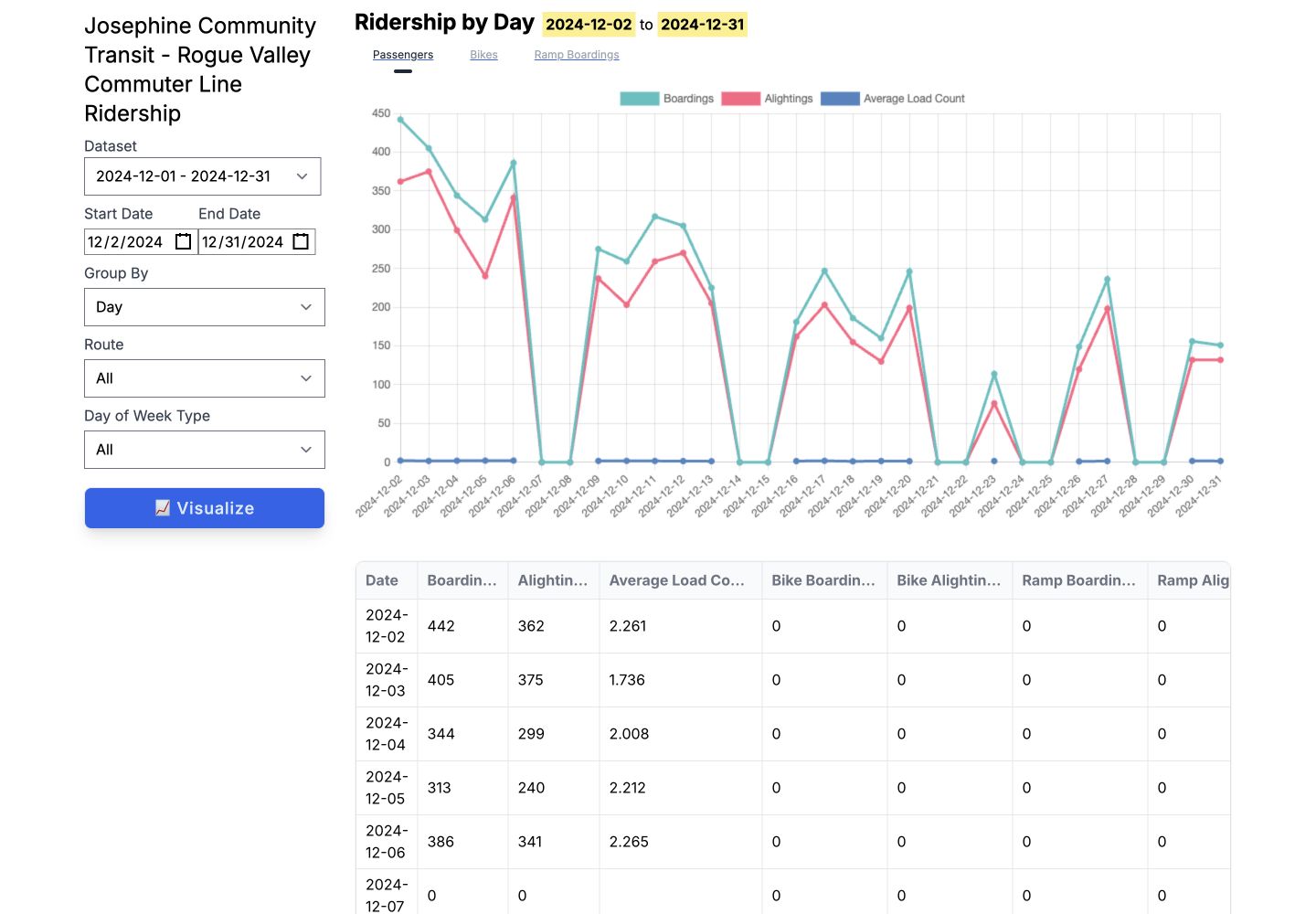
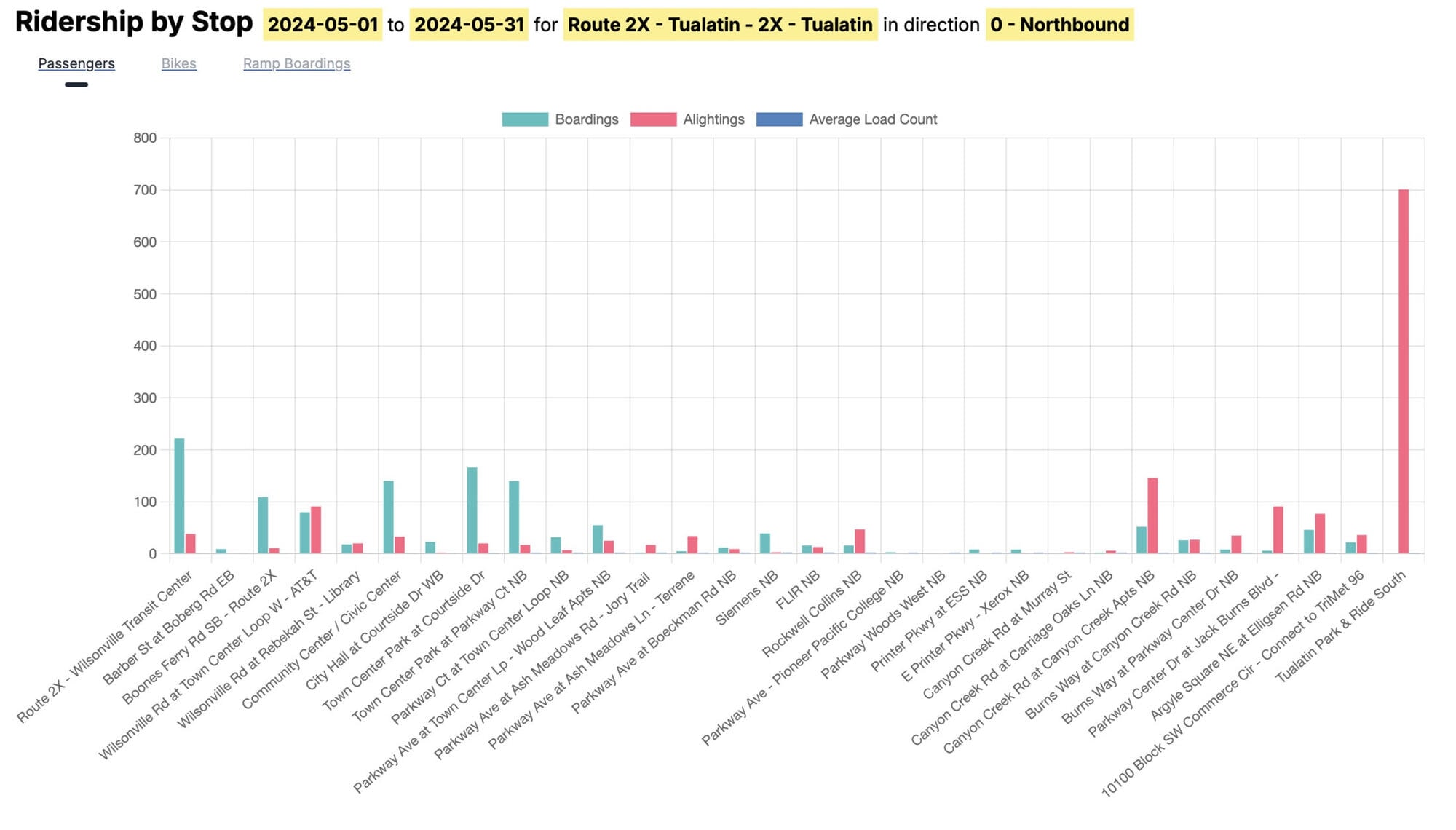
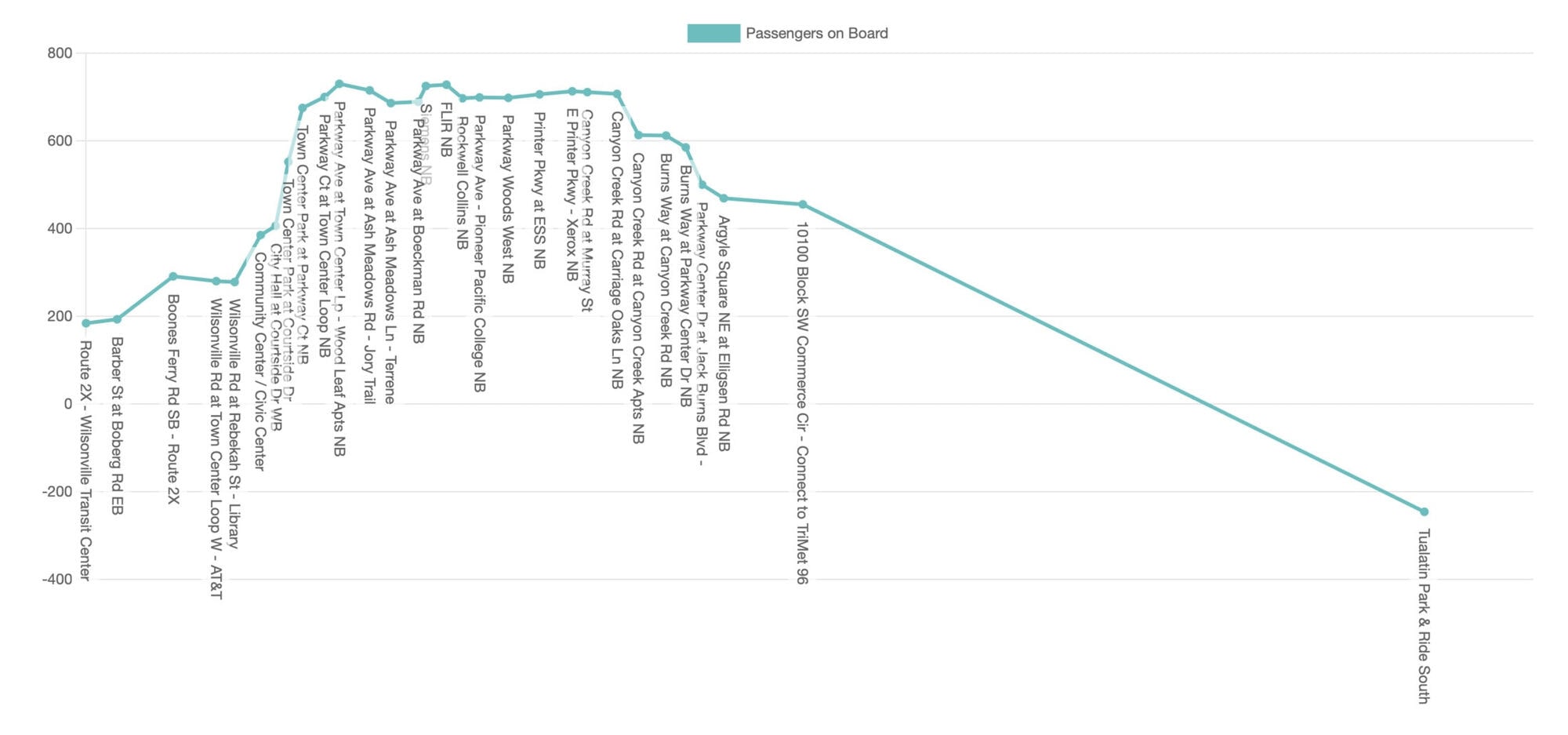
We created Ridership App, an open-source web application with charts, maps, and downloadable CSV files. Users can group ridership by route, stop, trip, date, day of week, or time of day. Public demonstrations use data from Josephine Community Transit and South Metro Area Regional Transit (SMART).
Helping agencies publish
We worked with four transit agencies to create and publish GTFS-ride data, including Josephine Community Transit, Rogue Valley Transportation District, Lane Transit District and SMART in Oregon. This included publication on Oregon DOT’s Oregon GTFS open-data website.
Related projects
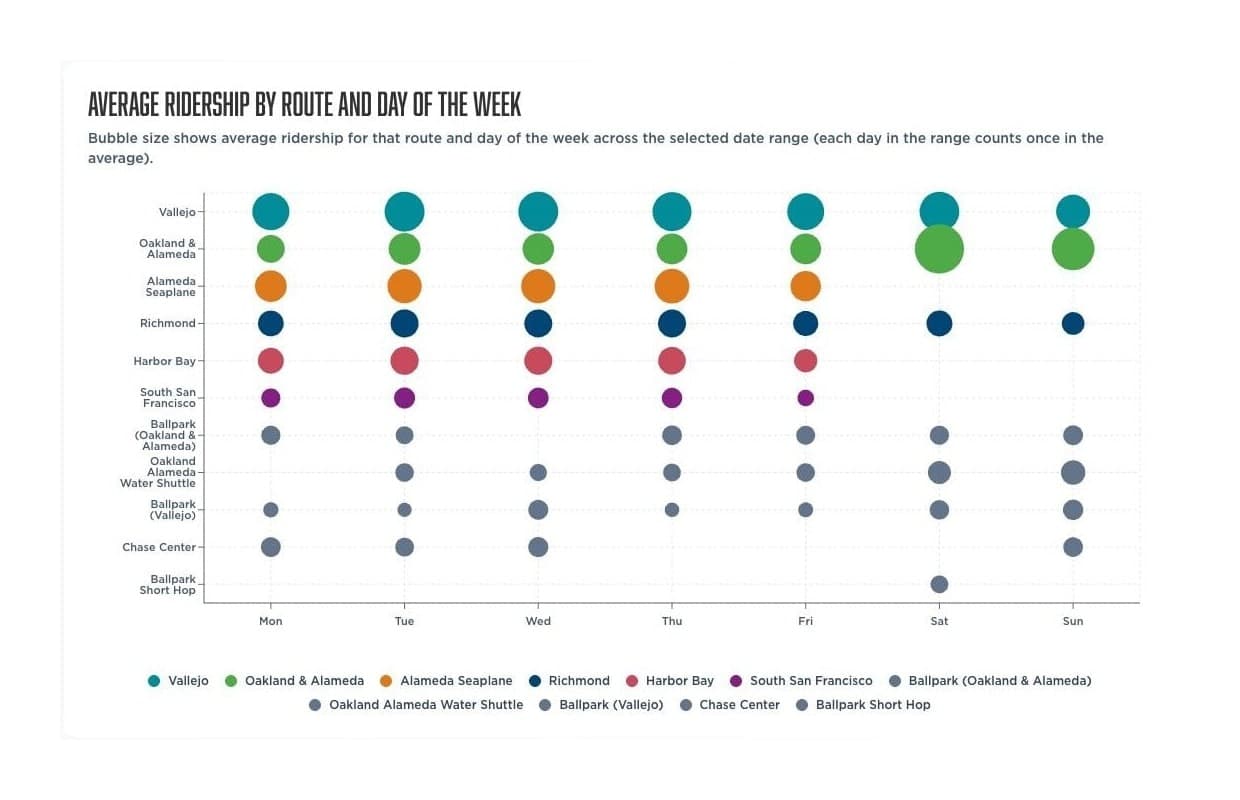
Ferry ridership reporting system
Passenger and bike counts from the vessel bridge to operations dashboards, automated reports, and public data.
Data & operationsTransit & rider tools
GTFS Accessibility Validator
A validator that evaluates accessibility data published in GTFS transit feeds.
Data & operationsTransit & rider toolsPlanning a similar project?
Tell us about your requirements and the people who will use the system.